


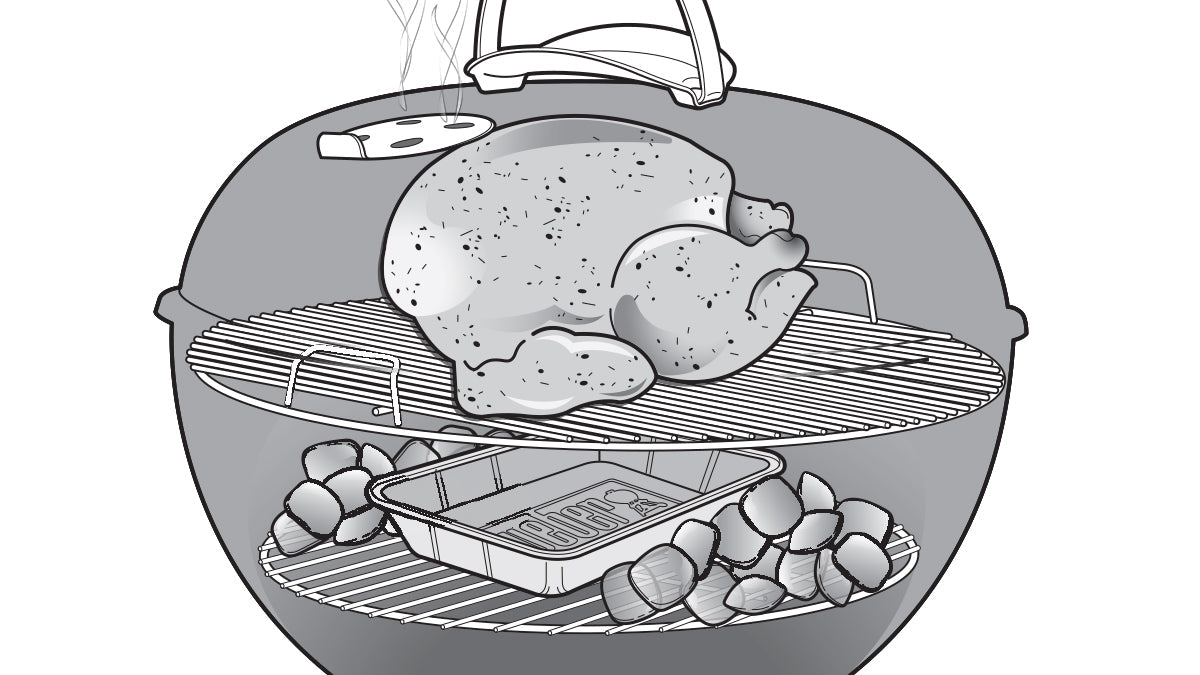
The Indirect Cooking Method
Indirect cooking is the cooking method that transforms your barbecue into an oven, using convection heat to roast or bake. The food is placed on the cooking grill, with fire either side, evenly cooking the food with indirect heat.
Preparing the Barbecue for Indirect Cooking
Open the top and bottom vents on the barbecue and remove the lid. Place 4 firelighters (2 on each side) in the cavities provided in your charcoal ‘V’ grate. Place the Char-Baskets™ on the charcoal grate and fill them with the required number of briquettes (for quantities, see table below).
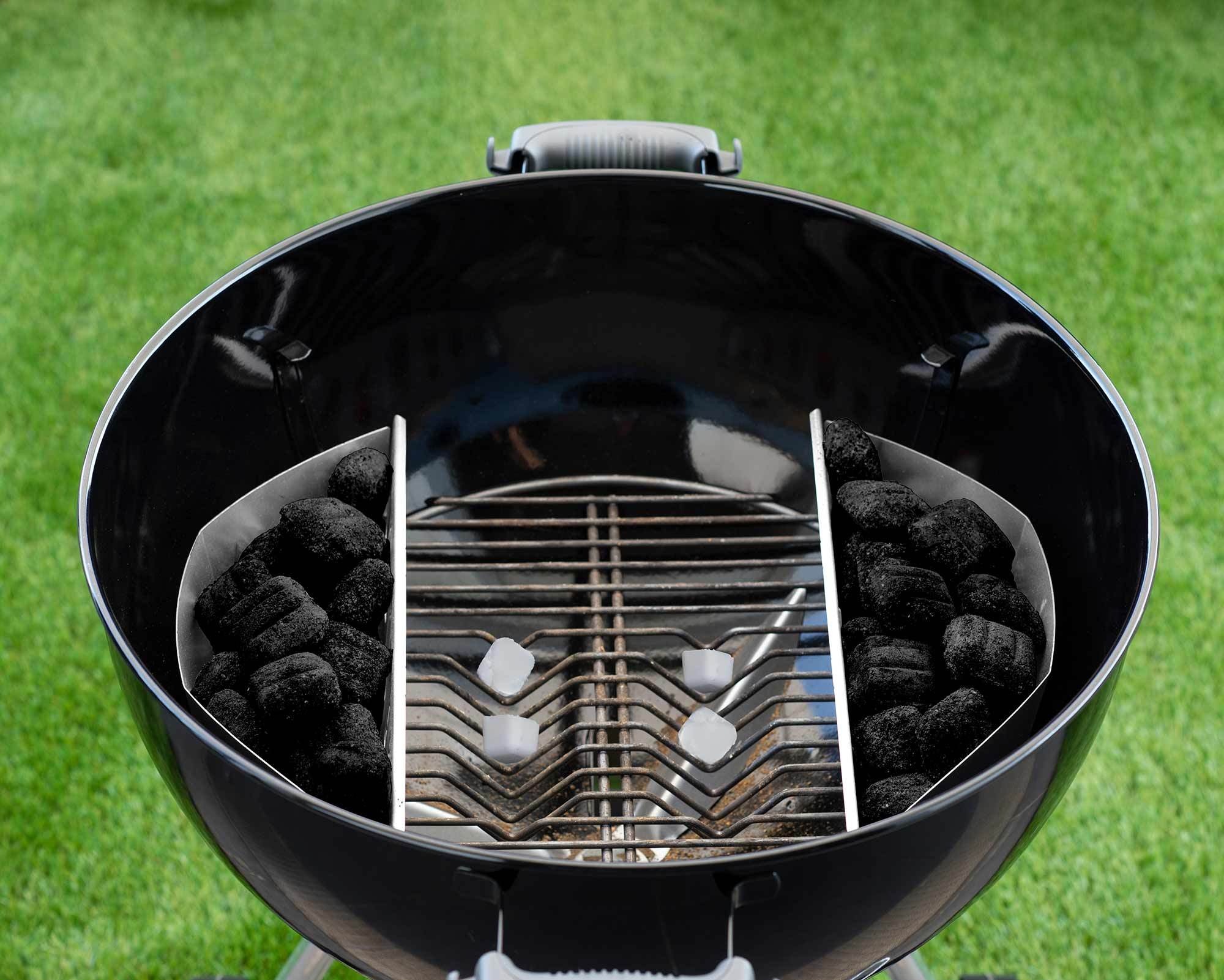
Light the firelighters, and using a pair of tongs, move the filled Char-Baskets over the firelighters. Make sure that all of the firelighters are burning well before leaving the barbecue, as a strong wind can blow them out if they‘re not burning properly.
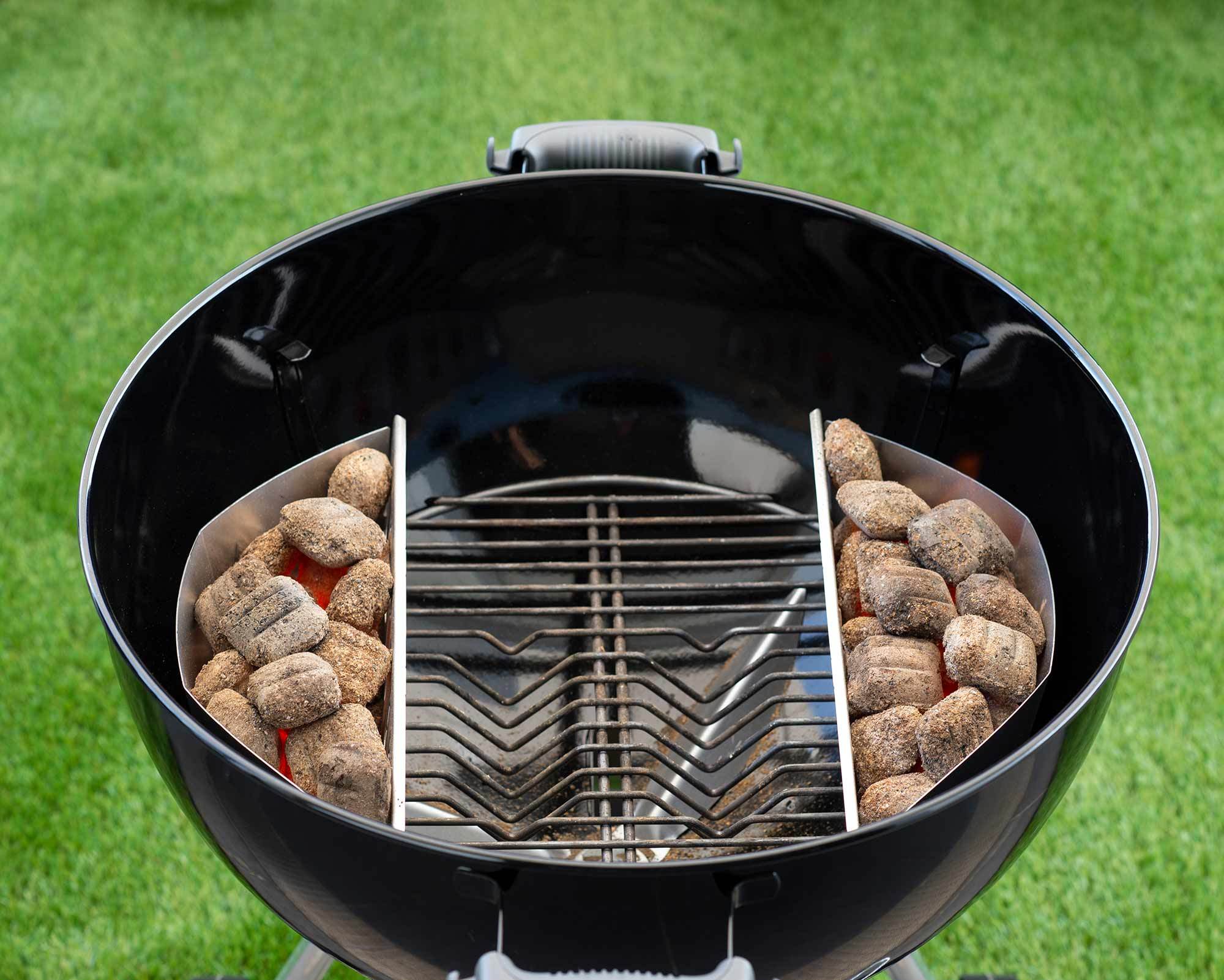
The barbecue can now be left until the briquettes are ready to cook. It will take about 25-30 minutes for the fire to establish itself. During this time, ensure that the lid is left off the barbecue and all vents are open. This allows more oxygen to reach the briquettes, helping to establish the fire faster.

Once the briquettes have mostly (at least 80%) ashed over, you can move the Char-Baskets to the rim of the charcoal grate and place a drip pan between them.
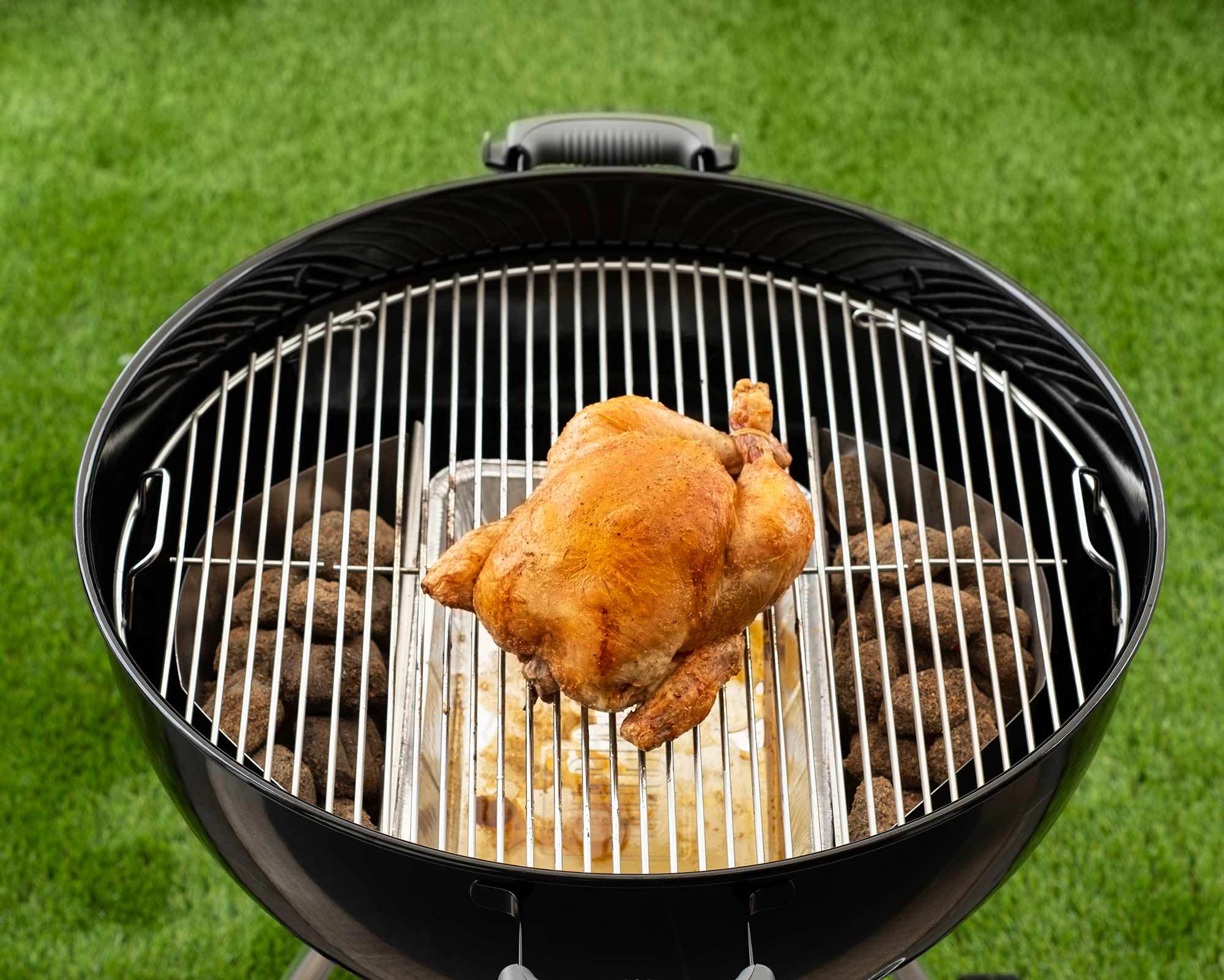
Place the cooking grill on the barbecue with the grill handles directly over the fires. The hinged sides are designed to facilitate the addition of smoking wood chunks or, if needed, extra barbecue fuel.
Place the lid on the barbecue. Let the cooking grill preheat for 5 minutes, then brush it clean. Now, place your food in the centre of the cooking grill, between the fires. For best results, keep the lid on the barbecue as much as possible.
Fuel Quantities
The temperature of an indirect cooking fire is determined by the amount of fuel used. In a 57cm (22”) barbecue kettle, these temperatures are achieved by using the Weber® BBQ Briquette quantities listed below.

Hot Tips
- Ensure the top vent on the lid is centred in the indirect cooking zone. If you place the lid with the vent over one of the Char-Baskets, it will create additional airflow to that side, making the fire burn hotter and burn out more quickly on that side.
- We highly recommended placing a disposable drip pan between your Char-Baskets and underneath the roast. This not only keeps your barbecue cleaner but also allows you to catch those delicious drippings from your roast.
The Low and Slow Cooking Method
Low and slow cooking is another fantastic way to use your Weber® Kettle. For short low and slow cooks, (2 hours or less), simply use 10-12 lit briquettes in one Char-Basket™.
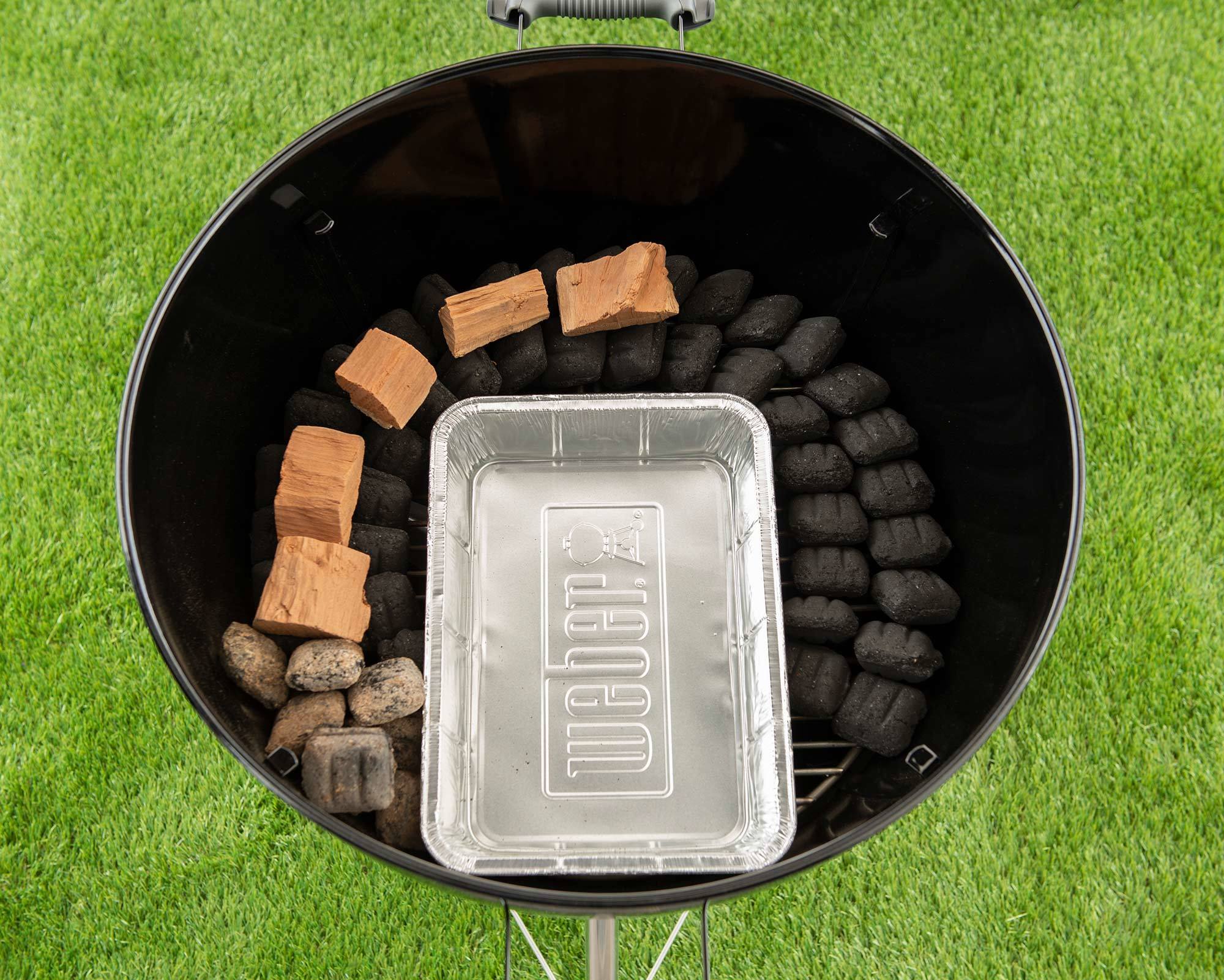
For longer low and slow cooks, we’ll show you how to use the ‘Snake Method’. This guide will show you how to create the low, consistent cooking temperatures required for low and slow cooking for up to 8 to 12 hours—enough time to cook a brisket or pork shoulder. As a general rule, temperatures in the range of 110°C to 135°C (225 – 275°F) are ideal for low and slow cooking.
Preparing the Barbecue for Low and Slow Cooking
Step 1: Start by opening the top and bottom vents on the barbecue, and remove the lid.
Step 2: Place two rows of Weber Briquettes around the outside of your charcoal grate, covering half the circumference of your Weber Kettle. Lean the briquettes on a 45-degree angle—this will help keep the ‘snake’ burning. Place chunks of smoking wood on top of the ‘snake’ to add smoke flavour, positioning these at the front of the ‘snake’.
Step 3: Light 8-10 Weber Briquettes in a corner of the charcoal grate, away from the snake (alternatively, you can use a chimney starter). Wait until they are completely ashed over, then place them at one end of the snake. Make sure that some of the lit fuel is touching the unlit fuel at the start of the ‘snake’.
Step 4: Place a drip pan into the Weber Kettle and fill it with warm water to help regulate the temperature and create a humid environment. You may need to refill the pan with more water after about 3-4 hours. If the pan dries out, the temperature may rise quickly.
Step 5: Ensure the vents on the kettle are open, then place the cooking grill and lid on. Wait for around 10-15 minutes until your temperature stabilises. Check the internal temperature of your kettle and adjust the top vent for temperature control, if needed. Generally, once your temperature has reached the low and slow cooking zone (110°C to 135°C), you can close the top vent halfway to “lock” in the temperature.
Note: If using the Kettle’s lid thermometer, ensure it is not directly over your briquettes, or you may get an incorrect temperature reading. We recommend using a digital thermometer, with the probe placed at ambient temperature, on the cooking grill, when using the snake method.
Step 6: Place your meat in the centre of the cooking grill, above the drip pan. If necessary, use aluminium foil to shield the meat if it hangs over the top of the briquettes. This will help avoid overcooking and burning.
Hot Tips
- If the temperature of your barbecue is falling, open the top air vent and ensure the bottom air vent is open and free from any debris. Position the top lid vent over the fire to help draw more oxygen through, which should increase the temperature of the barbecue.


